 Send Email
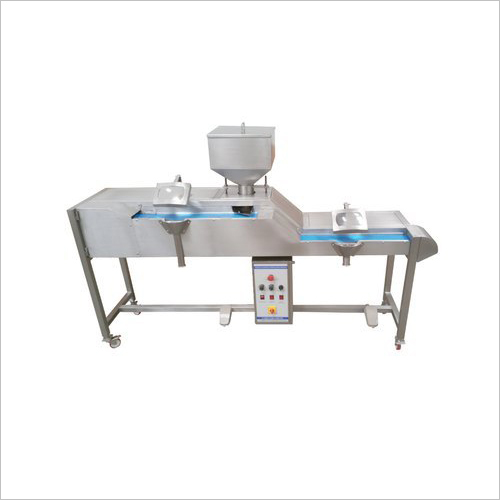
Capsule Inspection Machine
375000 INR/Unit
Product Details:
- Phase Single/Three Phase
- Frequency 50/60 Hz
- Usage & Applications Visual inspection and sorting of pharmaceutical capsules
- Temperature Ambient
- Features Adjustable speed, low maintenance, easy cleaning, high accuracy, ergonomic design
- Noise Level <70 dB
- Type Capsule Inspection Machine
- Click to View more
X
Capsule Inspection Machine Price And Quantity
- 2400.00 - 5500.00 INR/Unit
- 375000 INR/Unit
- 1 Unit
- Pharmaceutical, nutraceuticals
- 00 to 5
- Variable, up to 8 meters/minute
- Mounted on caster wheels for easy movement
- Emergency stop, interlocks, overload protection
- Manual or pneumatic
- 1-2 persons
- Mirror/Matte finish stainless steel surface
- LED/fluorescent lighting for clear inspection
- Yes, for operator safety
- Manual or semi-automatic visual inspection
Capsule Inspection Machine Product Specifications
- <70 dB
- Silver
- Stainless Steel (SS 304/316)
- Up to 150,000 capsules/hour
- 220V/380V
- Ambient
- Adjustable speed, low maintenance, easy cleaning, high accuracy, ergonomic design
- 450 kg
- PLC based (Programmable Logic Controller)
- Capsule Inspection Machine
- Visual inspection and sorting of pharmaceutical capsules
- 1.5 kW
- Single/Three Phase
- 50/60 Hz
- 1500 x 800 x 1400 mm
- Yes
- Pharmaceutical, nutraceuticals
- 00 to 5
- Variable, up to 8 meters/minute
- Mounted on caster wheels for easy movement
- Emergency stop, interlocks, overload protection
- Manual or pneumatic
- 1-2 persons
- Mirror/Matte finish stainless steel surface
- LED/fluorescent lighting for clear inspection
- Yes, for operator safety
- Manual or semi-automatic visual inspection
Capsule Inspection Machine Trade Information
- 30 Unit Per Month
- 1 Week
Product Description
Capsule Inspection Machine is one of the finest solutions for ensuring that faulty capsules are rejected before leaving the producing area, and that only the best quality capsules are selected for packing and delivery to the customers. The greatest characteristic of this machine is that it does not require any change parts for different shapes and sizes of capsules. In addition, the Capsule Inspection Machine has a uniquely designed methodology for rotating the capsules to 360 degrees.
Precision and Productivity in Capsule Inspection
This capsule inspection machine elevates quality control for pharmaceutical and nutraceutical industries, allowing for a thorough visual examination. Its variable conveyor speed and adjustable illumination provide optimized visibility across all capsule sizes. The robust stainless steel construction, paired with an ergonomic layout and easy-clean design, supports continuous operation with minimal maintenance, increasing throughput and reducing downtime.
Safety and Operator Comfort at Its Core
Designed for both operator safety and workplace efficiency, the machine is equipped with emergency stops, interlock systems, overload protection, and a protective glass guard. Its ergonomic structure promotes comfort during inspection tasks, while smooth caster wheels ensure convenient relocation within production areas, adapting easily to changing operational requirements.
Automated Controls for Consistent Results
Featuring PLC-based controls and options for manual or pneumatic reject mechanisms, this machine streamlines inspection with high precision. Programmable settings, adjustable speed, and compatibility with different electrical phases ensure reliable integration into various factory environments.
FAQs of Capsule Inspection Machine:
Q: How does the Capsule Inspection Machine enhance capsule quality control?
A: The machine enables operators to perform detailed visual inspections under optimal lighting, using variable conveyor speeds to ensure each capsule is meticulously checked. This process helps promptly identify defects, ensuring only high-quality capsules proceed to packaging, thereby upholding product standards.Q: What are the operator requirements and roles during inspection?
A: Typically, 1-2 operators are needed to manage manual or semi-automatic visual inspection, monitor the conveyor, operate the PLC controls, and handle the reject mechanism. Their responsibilities include observing capsules, removing defective ones, and ensuring the machine runs smoothly and safely.Q: When should the inspection process be conducted within production?
A: Capsule inspection using this machine is ideally performed after capsule filling and before final packaging. This ensures that any defective, deformed, or contaminated capsules are identified and removed prior to reaching the consumer.Q: Where is the Capsule Inspection Machine most commonly used?
A: The machine is predominantly utilized in pharmaceutical and nutraceutical manufacturing facilities in India and globally. It is an essential part of quality assurance processes within these industries, aiding in compliance with regulatory standards.Q: What is the process of sorting and rejecting defective capsules?
A: Defective capsules are identified visually as they move along the conveyor, illuminated by LED or fluorescent lighting. Depending on the model configuration, rejections are executed either manually by an operator or pneumatically via the integrated reject mechanism, ensuring only compliant products advance.Q: What benefits does the PLC-based control system offer?
A: PLC-based control allows precise management of conveyor speed, lighting, and reject functions, providing consistent inspection results. Programmable settings also facilitate adaptability to varying inspection criteria and production needs.Q: How does the machine support easy cleaning and maintenance?
A: With a stainless steel surface (mirror/matte finish) and ergonomic design, the machine is simple to wipe down and maintain. Tool-free access to main parts and smooth surfaces reduce cleaning time while upholding hygienic conditions required in pharmaceutical settings.Tell us about your requirement

Price:
Quantity
Select Unit
- 50
- 100
- 200
- 250
- 500
- 1000+
Additional detail
Mobile number
Email

Other Products in 'Inspection Machine' category

UNIQUE EQUIPMENTS
GST : 30AABFU0959R1ZT
Contact Details

- Z-15, Marmagao Industrial Area, Off. Airport Road, Chicalim - 403711, Goa, India
- Phone : 08045477017

- Mr. Pravin P. Parker (Director)
- Mobile : 08045477017
- pravinparker@gmail.com
 Send Inquiry
 Send Inquiry
 Send SMS
 Call Me Free
|



UNIQUE EQUIPMENTS
All Rights Reserved.(Terms of Use)
Developed and Managed by Infocom Network Private Limited.
Developed and Managed by Infocom Network Private Limited.
