 Send Email
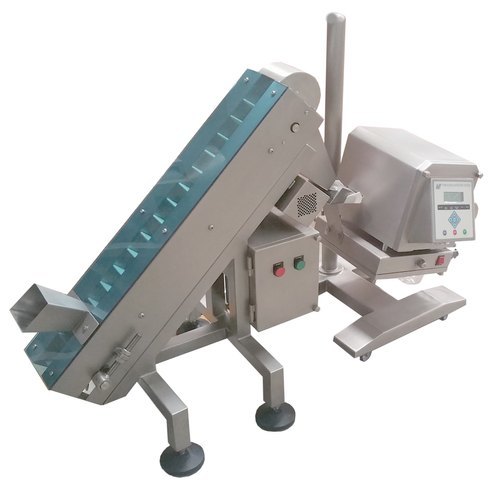
Elevating Type Tablet Metal Detector
70000.00 - 155000.00 INR/Unit
Product Details:
- Phase Single Phase
- Noise Level Low
- Temperature 10°C to 40°C
- Features High sensitivity, Self calibration, Reject mechanism, Easy-to-clean design
- Usage & Applications Detection of metal contaminants in pharmaceutical tablets and capsules
- Frequency 50 Hz
- Type Elevating Type Tablet Metal Detector
- Click to View more
X
Elevating Type Tablet Metal Detector Price And Quantity
- 70000.00 - 155000.00 INR/Unit
- 1 Unit
Elevating Type Tablet Metal Detector Product Specifications
- Metallic Silver
- 10°C to 40°C
- Automatic
- 120W
- Yes
- Detection of metal contaminants in pharmaceutical tablets and capsules
- 50 Hz
- Stainless Steel
- Elevating Type Tablet Metal Detector
- 220V AC
- High sensitivity, Self calibration, Reject mechanism, Easy-to-clean design
- Single Phase
- Up to 6000 Tablets/Min
- Approx. 75 Kg
- 920 mm x 620 mm x 1420 mm
- Low
- IP55 Rated
- Digital LED
- Up to 90% RH
- Adjustable by control panel
- Audio & Visual Indication
- Multi-product memory programmable
- CE Marking & GMP Standards
- High speed real-time tracking
- Auto Flap/Divert System
- Electromagnetic Induction
- Fine & Coarse settings
- Matt/Glossy Stainless Steel
Elevating Type Tablet Metal Detector Trade Information
- 30 Unit Per Month
- 1 Week
Product Description
The Elevating Type Tablet Metal Detector is a highly effective piece of equipment which is used by many of the businesses in the pharmaceutical industry. In basic terms, this device is used for detecting metal inside the tablets. The elevation provided in the equipment enables the user to place the tablet in a structured manner and get the respective results with utmost efficiency. Overall, for the detection of metal contaminants inside of tablets, the Elevating Type Tablet Metal Detector is the best option.
Precision Metal Detection for Pharmaceuticals
Our Elevating Type Tablet Metal Detector is crafted for the rapid and accurate detection of metallic contaminants in pharmaceutical tablets and capsules. Leveraging electromagnetic induction, this system provides high sensitivity and reliability, ensuring product safety and regulatory compliance. With programmable product memory and a user-friendly control panel, it supports varied operational needs across different products, maintaining the highest quality standards.
Robust and Hygienic Stainless Steel Design
Manufactured with premium stainless steel in both matt and glossy finishes, this detector meets rigorous hygiene demands. The IP55 ingress protection rating guards against dust and water, and the easy-to-clean construction minimizes downtime. Together with low noise operation, the robust design is ideal for modern pharmaceutical production environments where cleanliness and efficiency are paramount.
Intelligent Operation with Simple Controls
Equipped with a digital LED display for clear status indication and touch controls for sensitivity and conveyor speed adjustment, this metal detector allows seamless integration into automated production lines. Its high-speed, real-time sampling and programmable memory ensure consistent performance, while automated rejection and dual audio-visual alarms alert operators to detected contaminants promptly.
FAQs of Elevating Type Tablet Metal Detector:
Q: How does the Elevating Type Tablet Metal Detector detect metal contaminants in tablets?
A: The system uses electromagnetic induction technology, which generates a magnetic field to detect and identify metal particles as tablets pass through the detection area. This ensures precise and reliable contaminant detection during pharmaceutical production.Q: What types of contaminants can this metal detector identify in pharmaceutical products?
A: This metal detector is capable of identifying ferrous, non-ferrous, and stainless steel contaminants, providing comprehensive protection against different types of unwanted metallic particles in tablets and capsules.Q: When should sensitivity be adjusted, and how is it managed on this device?
A: Sensitivity can be adjusted via the control panel, either in fine or coarse increments. Adjustments are typically made when switching between products or to enhance detection accuracy based on specific tablet characteristics and production requirements.Q: Where can the Elevating Type Tablet Metal Detector be used?
A: It is ideal for pharmaceutical manufacturing facilities, especially where tablets and capsules must be rigorously screened for metal contamination as per GMP and CE regulations.Q: What is the process for rejecting contaminated products?
A: Upon detecting metal contaminants, the automatic flap/divert system immediately removes the affected tablets from the production line without manual intervention, ensuring product integrity and minimizing batch losses.Q: How does real-time tracking benefit the detection process?
A: The high-speed real-time tracking allows the device to analyze and respond to contaminants instantly, maximizing detection accuracy and throughput, even at high conveyor speeds.Q: What are the main benefits of using this metal detector in pharmaceutical production?
A: Key benefits include enhanced product safety, regulatory compliance, automated contamination removal, minimal production interruptions, and efficient high-volume screening. The easy-to-clean, robust design also supports seamless operations in demanding environments.Tell us about your requirement

Price:
Quantity
Select Unit
- 50
- 100
- 200
- 250
- 500
- 1000+
Additional detail
Mobile number
Email

Other Products in 'Inspection Machine' category

UNIQUE EQUIPMENTS
GST : 30AABFU0959R1ZT
Contact Details

- Z-15, Marmagao Industrial Area, Off. Airport Road, Chicalim - 403711, Goa, India
- Phone : 08045477017

- Mr. Pravin P. Parker (Director)
- Mobile : 08045477017
- pravinparker@gmail.com
 Send Inquiry
 Send Inquiry
 Send SMS
|



UNIQUE EQUIPMENTS
All Rights Reserved.(Terms of Use)
Developed and Managed by Infocom Network Private Limited.
Developed and Managed by Infocom Network Private Limited.
